Red meat: villain, superfood… or just misunderstood?
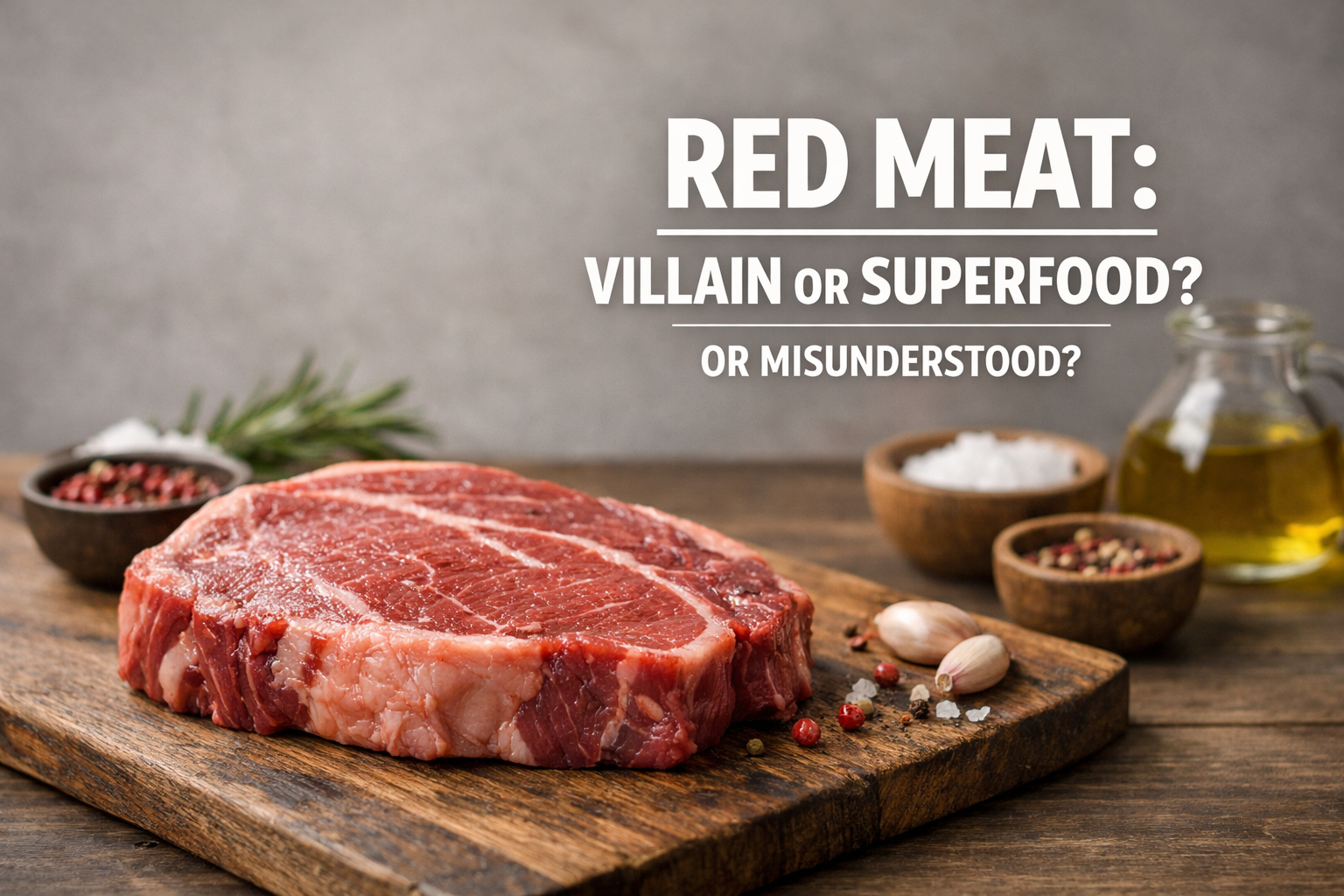
For years, red meat has been painted as a dietary villain—blamed for cancer and chronic disease. But when you look closely at the science, the story is far more nuanced.
Large reviews and meta-analyses consistently show that the strongest health risks are linked to processed meats (bacon, sausages, deli meats), not unprocessed red meat. In contrast, associations between whole, unprocessed red meat and disease are generally weak, inconsistent, and heavily influenced by lifestyle factors and what foods replace meat in the diet.
Unprocessed red meat is one of the most nutrient-dense foods available, providing highly bioavailable iron, vitamin B12, zinc, and complete protein—nutrients many people struggle to obtain in sufficient amounts. Reviews published in Annals of Internal Medicine found that reducing red meat intake resulted in very small risk reductions, with low certainty of evidence, suggesting the popular fear-based messaging oversimplified the data.
The real issue was never steak itself—it was ultra-processed meat, poor-quality food systems, excessive charring, and overall dietary context. When red meat is responsibly sourced, moderately consumed, and part of a nutrient-rich diet, the evidence does not support treating it as a food to fear.
Red was never the monster it was made out to be.